GUIDE
What Is A Qualified Meeting?
A qualified meeting is a sales meeting the buyer attended that also met criteria both sides agreed to in writing before outreach began. If either half is missing, it is a booked meeting or a held meeting, and it should not be billed as qualified.
// GUIDE
The Definition I Write Into Every Contract
On a discovery call this fall, a prospect described an earlier outbound effort in a single sentence. "Forty-five percent of them were just not qualified." When I reviewed my strongest discovery calls from the same stretch, close to half raised the same worry, usually as a question about paying for bad meetings. The answer depends on how the word qualified is defined, and many outbound agreements leave it vague.
What is a qualified meeting?
A qualified meeting is a sales meeting the buyer actually attended that also met criteria both sides agreed to in writing before outreach began. A meeting that met every criterion but never happened adds nothing to your pipeline, and a meeting held with the wrong person costs your closer an hour.
Writing it down is what makes the definition enforceable. Criteria that live in someone's memory of a kickoff call turn every questionable meeting into an argument, while a signed document turns it into a quick check.
The four tests every qualified meeting has to pass
A meeting has to pass all four of these tests to count.
- The prospect attended, either at the scheduled time or at a new time both sides agreed on.
- The person who attended holds one of the titles named in the criteria.
- The company matches the agreed size, industry and region, and it is not on your exclusion list.
- The prospect confirmed a need described in the criteria, before or during the meeting.
The fourth test causes the most debate. A confirmed need does not require a signed budget. It means the prospect acknowledged the problem your criteria describe, such as a vendor contract coming up for renewal. Our reps book the meeting first and confirm the need once the prospect agrees to meet, and your closer confirms it again in the room.
Booked, held and qualified are three different numbers
A booked meeting is a time on the calendar, and a held meeting is one the prospect actually attended. A qualified meeting is a held meeting that also passed the title, company and need tests. Every outbound report should show all three, because booked meetings are the easiest figure to inflate.
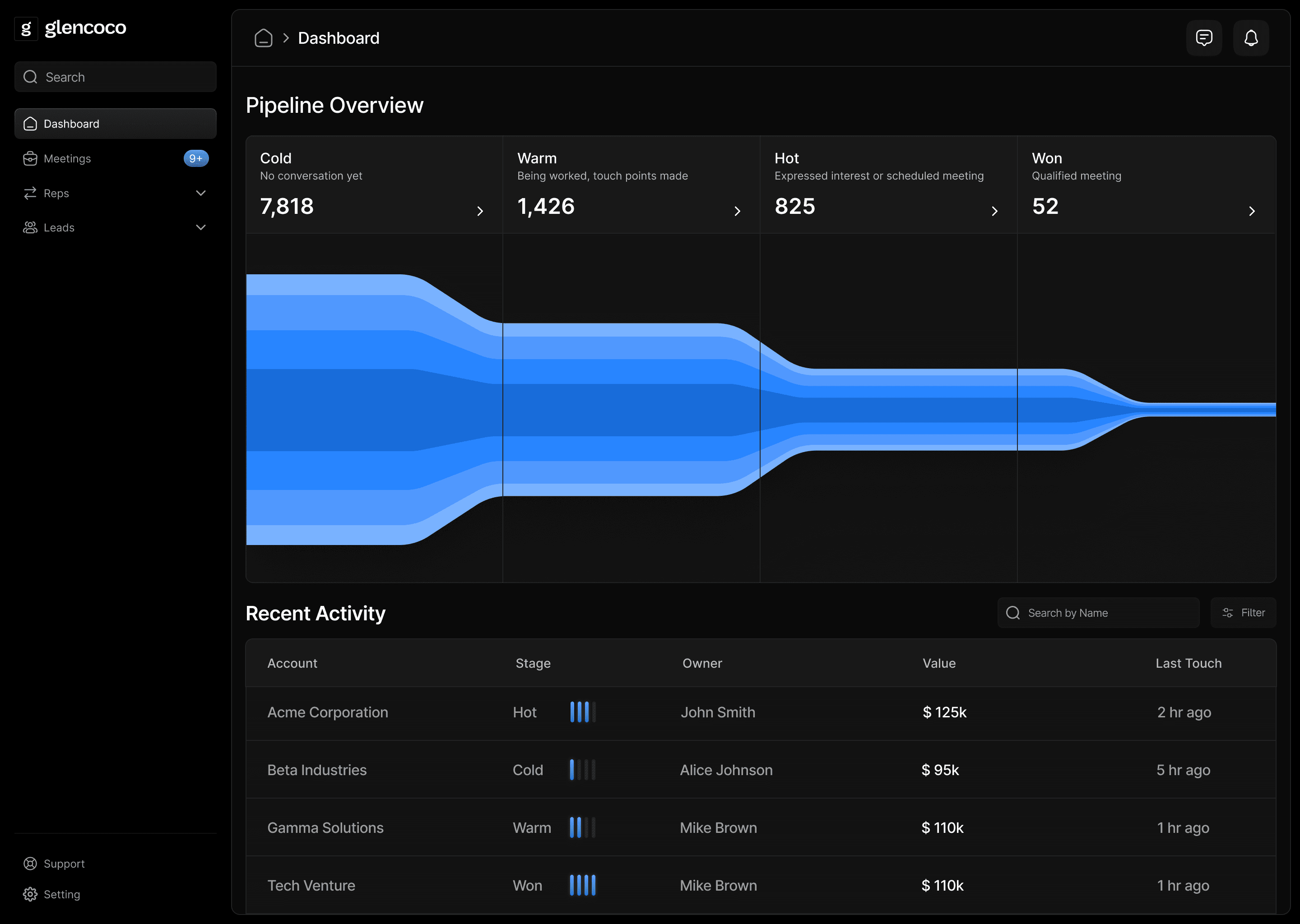
Glencoco, the pay-per-meeting platform every Exodus campaign runs on, shows how much the last step matters. In the last 12 months, 85% of attended meetings across the platform were accepted as qualified. The other 15% showed up and were still not accepted, which is why the written definition matters even after the prospect joins the call.
How to write qualified meeting criteria before anyone dials
Good criteria are specific enough that two strangers would reach the same verdict on any meeting. I write them as an exhibit to the agreement.
| What to define | What good looks like |
|---|---|
| Titles | A named list, such as VP of Sales, Director of IT or owner, plus any titles you will not accept |
| Company size | An employee or revenue range, and the source you will check it against |
| Industry | The industries in scope, written the way your best customers describe themselves |
| Region | The states, provinces or countries your team can actually serve |
| Exclusion list | Current customers, open opportunities, partners and any account your own team is already working |
Write the need the way a buyer would say it on the phone, and state plainly what does not count. Don't skip the exclusion list either. If your own team is already working an account and our rep books a meeting there, nobody wins that argument after the fact.
A sample qualified meeting clause for your contract
This is the language I would start from, with the exhibit adjusted to your market.
"Qualified Meeting" means a scheduled sales meeting:
- (a) that the Prospect attends;
- (b) with a Prospect whose title appears in Exhibit A;
- (c) at a company that matches the size, industry and region in Exhibit A and is not on Client's exclusion list; and
- (d) where the Prospect confirms a need described in Exhibit A before or during the meeting.
Client may dispute a meeting within 48 hours of its scheduled time by citing the test it failed. Meetings that are not attended are not billed.
I'm not a lawyer, so please have your own counsel review this language before it goes into a contract. Two details carry most of the weight. A dispute has to name a specific test, which keeps the conversation about evidence, and an unattended meeting is never billed, so the provider absorbs the cost of a no-show.
Where qualified meeting definitions go wrong
The first failure is vague language. Words such as "decision-maker" and "mid-market" mean something different to every reader, so name the titles and the ranges.
The second is a moving target. Criteria that change after launch can turn last week's good meetings into this week's disputes. Change them in writing and going forward, and leave meetings already booked under the old version alone.
The third is a need test that is really a budget test. If a prospect must confirm budget, authority and timing on a first cold meeting, very few meetings will pass, and reps will learn to stop asking. I would much prefer a clearly confirmed pain, with budget left to your closer.
The fourth is an open-ended dispute window. When a meeting can be challenged weeks later, after a deal has stalled for unrelated reasons, the definition stops measuring the meeting.
How we apply the definition at Exodus
Every Exodus campaign starts with a one-hour messaging call where we agree on the titles, company size and industry we will call and the need our reps will listen for. Those criteria decide what you pay for. Our reps only cold call, and we use email to follow up after a conversation.
Every call is recorded on Glencoco, so you can hear the exact moment a meeting was booked. You have 48 hours after a meeting to dispute it, and no-shows and cancellations cost you nothing. When a meeting is disputed, we pull the recording and find the test it failed. Then we fix the cause, whether that is the list, a rep's habit or the screenplay, which is our word for the call script.
Glencoco's platform totals give a sense of scale. Since March 2023, campaigns on Glencoco have held 5,924 qualified meetings at 5,891 different companies, and 3,463 of them, or 58%, were with a director, VP, owner or C-suite buyer. Those figures cover every campaign on the platform, and Exodus campaigns are one part of them.
If you're still choosing how to pay for meetings, my guide on pay per meeting vs retainer covers the trade-offs. When you're ready to write criteria for your own market, I'm glad to work through a first draft with you on a call, and you can read how a campaign works beforehand.
Common Questions
What is a qualified meeting?
It's a sales meeting the buyer attended that also met criteria agreed in writing before outreach, usually title, company size, industry, region and a confirmed need.
What is the difference between a booked meeting and a qualified meeting?
A booked meeting is a time on the calendar. A qualified meeting actually happened and passed every agreed test for title, company and need.
Who decides whether a meeting is qualified?
The written criteria decide. Both sides agree on them before dialing, and the client can dispute a meeting within a set window by naming the test it failed.
Should a qualified meeting require a confirmed budget?
Usually not for a first cold meeting. I look for a confirmed need and leave budget and timing to the closer, who's better placed to work through them.
// HOW WE APPLY IT
How Exodus Uses This Definition
We lock the criteria with you on a one-hour messaging call before anyone dials. Every meeting arrives with its call recording, and you have 48 hours to dispute one that missed. You are billed only for meetings that pass.